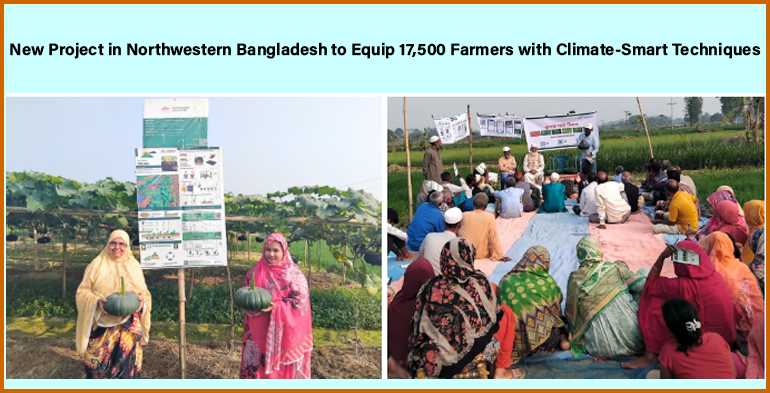
Agrilife24.com: After working with smallholder farmers in coastal Bangladesh since 2020, East-West Seed Knowledge Transfer Foundation (EWS-KT) is excited to expand its services to the northwestern part of the country. With support from De Eik Foundation, EWS-KT is launching a 3-year project to build a climate-resilient and profitable vegetable value chain in the Barind Tract.
This upland region is currently dominated by water-intensive rice cultivation, but farmers are facing mounting challenges due to irrigation-driven groundwater depletion and increasingly erratic rainfall. In some areas, rice farmers are beginning to shift to fruits and vegetables, which require less water and have the potential for higher profits. However, their success is hindered by poor soil, low water availability, and fragmented vegetable markets, along with limited access to quality seeds, sound farming advice, and reliable market information.
Through this project, EWS-KT and De Eik Foundation aim to transform water-stressed, low-diversity, and low-yield farming systems in the Barind Tract into sustainable, market-oriented horticultural enterprises. Activities focus on building the capacity of smallholder farmers in climate-smart, profitable vegetable production, together with strengthening local value chains and farmers’ market knowledge and connectivity. Stronger market integration is key to ensuring that farmers’ increased productivity translates to solid economic benefits.
In total, the project will equip 17,500 farmers with practical skills and knowledge in climate-resilient vegetable cultivation, including water-efficient technologies, techniques for improving and maintaining soil health, integrated pest management, and responsible use of agrochemicals. To advance women’s economic empowerment, 40% of the project participants will be women, and women will also be supported to start entrepreneurial businesses like seedling nurseries.
With climate-smart techniques and market integration, vegetable cultivation in the Barind Tract offers strong potential for profitable and sustainable livelihoods for farmers, as well as improved nutrition security for consumers.