

























 BAU Correspondent:Researchers at Bangladesh Agricultural University (BAU) have reported the first scientific detection of Burkholderia cepacia complex (Bcc), a group of potentially pathogenic bacteria, in goats in Bangladesh.
The finding, published in the international peer-reviewed journal PLOS ONE, provides the first documented scientific evidence of Bcc in goats in the country, according to the researchers.
Bcc comprises closely related bacterial species capable of surviving in soil, water, plants and a range of animal hosts. The bacteria have previously been reported in horses, dogs, cats, birds, sheep and other animals in different parts of the world.
Some members of the Bcc group are recognised as opportunistic pathogens and can cause serious infections in humans, particularly those with weakened immune systems or chronic respiratory conditions. However, the researchers stressed that the present study found no evidence of transmission of the bacteria from goats to humans.
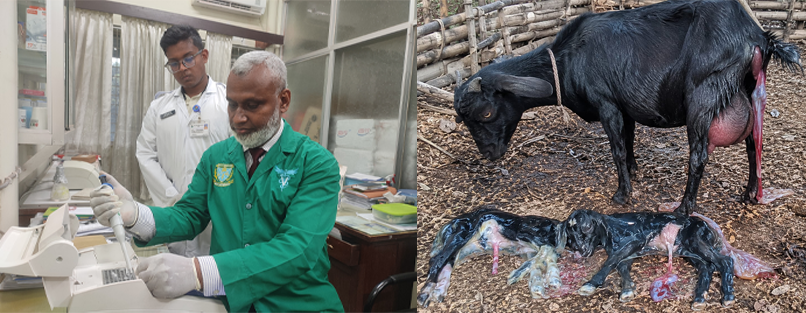
The study was led by Professor Dr Md Siddiqur Rahman of the Department of Medicine at BAU, with Abdullah Al Mamun serving as the principal researcher. Researchers from BAU's Faculty of Veterinary Science and Armed Forces Medical College in Dhaka also took part in the study. Other members of the research team were S M Sujan Ashraf, Amir Hamza Shuvo, Farhan Ibne Siddique, Hasan Khan, Naeem Ahammed Ibrahim Fahim, Chandra Shaker Chouhan, Dr Farzana Yeasmin, Dr Md Mahbub Alam and Dr Md Tanvir Rahman.
The research was funded through grants from the University Grants Commission of Bangladesh and the Ministry of Education.
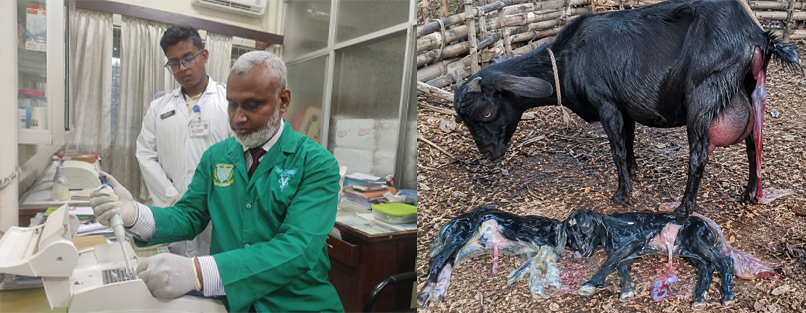
For the study, researchers collected blood samples from 40 Black Bengal goats at a BAU farm. Of the animals, 30 had a previous history of respiratory problems and abortion, while 10 clinically healthy goats were included as a control group.
The samples underwent a series of laboratory tests, including bacterial culture, serological examination, polymerase chain reaction (PCR), DNA sequencing and phylogenetic analysis.
Burkholderia bacteria were detected in samples from several goats with a history of illness. Subsequent molecular analysis and DNA sequencing confirmed that the isolates belonged to the Burkholderia cepacia complex. No bacterial growth was detected in samples from the healthy control goats. Phylogenetic analysis showed that the strains identified in the study were closely related to Burkholderia strains previously reported in India, Japan and China. The DNA sequences generated during the research have also been deposited in the international GenBank database.
Professor Dr Md Siddiqur Rahman said the finding marks the first scientific evidence of Bcc in goats in Bangladesh and could pave the way for further investigation into the bacteria's distribution, possible sources and implications for animal health and public health. He said Bcc includes environmentally persistent bacterial species that are internationally recognised as opportunistic pathogens, with some members capable of causing serious infections in humans.
Farhan, a researcher associated with Armed Forces Medical College, said the findings could contribute to strengthening the One Health approach by highlighting the links among human, animal and environmental health.
The researchers, however, cautioned that the findings should not be interpreted as establishing a direct link between Bcc and abortion in the affected goats. The study did not determine that the bacteria caused the reproductive problems observed in the animals. They also stressed that no evidence of animal-to-human transmission was identified. As the study did not include human or farm-environmental samples, further research will be necessary to assess whether any such transmission risk exists.
The researchers recommended broader investigations involving goats, farm environments and human samples from different parts of Bangladesh to determine the prevalence, sources, transmission pathways and wider public-health significance of Bcc.