





















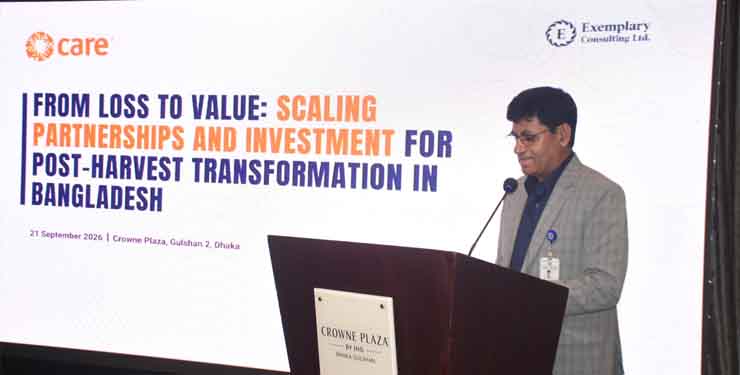




National workshop calls for coordinated investment, public-private partnerships, and scalable market-driven solutions to transform Bangladesh’s agri-food sector
 Agrilife24.com:CARE Bangladesh convened a national multi-stakeholder workshop, “From Loss to Value: Scaling Partnerships and Investment for Post-Harvest Transformation in Bangladesh,” bringing together government, academia and research, agro-industry, business associations, financial institutions, development partners, startups, and farmer organizations to chart practical pathways for reducing post-harvest losses across Bangladesh’s agricultural and food systems.
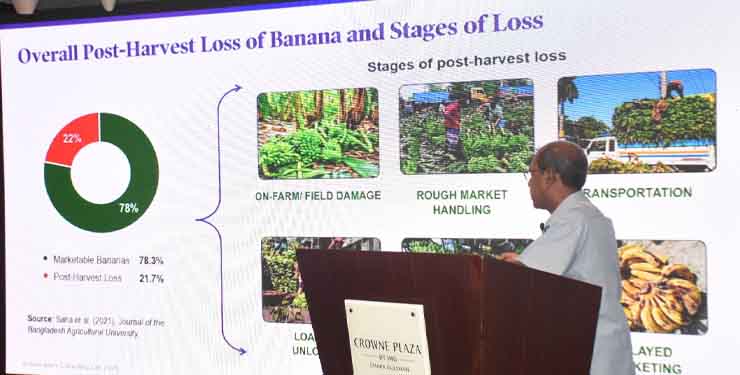
Post-harvest loss remains a critical challenge affecting farmers’ incomes, food security, and market competitiveness. Addressing it demands coordinated action spanning production, storage, transportation, processing, marketing, finance, and policy, well beyond individual or isolated interventions.
As the Chief Guest, Md Abdur Rahim, Director General, Department of Agricultural Extension, Ministry of Agriculture, said: “CARE Bangladesh can play a catalytic role in bringing these stakeholders together and helping identify viable investment opportunities, while creating stronger public-private partnerships. We need to move from fragmented interventions towards a more connected market system, in a need based solution manner ”
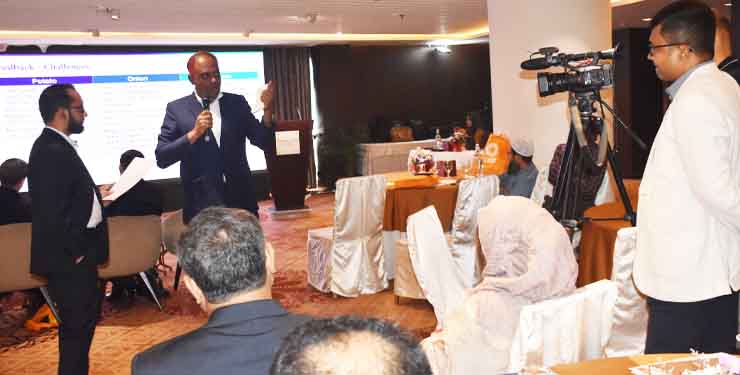 The workshop examined how market-driven solutions, technology, innovation, and stronger public-private coordination can reduce losses and increase value for farmers and value-chain actors and emphasized on the matter. Discussions emphasized improving farmer-market linkages, expanding access to appropriate technologies, and developing efficient post-harvest infrastructure. Financial institutions contributed perspectives on financing agri-business investments, while public-private-development partnerships were highlighted as essential to transitioning from pilot interventions to scalable solutions.
CARE Bangladesh’s engagement in post-harvest loss reduction forms part of its broader work to promote inclusive and sustainable agricultural market systems. Through collaboration with private-sector actors and other stakeholders, CARE Bangladesh seeks to support solutions that can contribute to improved farmer incomes, stronger value chains and more resilient food systems.
Dr Moin Salam, Former Professor, Department of Agronomy, Bangladesh Agricultural University, said, “Given Bangladesh’s strong preference for fresh food, agro-processing should be more focused and market-oriented, identifying the areas where specialization can generate the greatest value rather than trying to diversify without clear market demand.”
Ram Das, Country Director, CARE Bangladesh: “Reducing post-harvest loss is not only about preventing food from being wasted - it is about creating greater value from what farmers produce. By bringing together government, businesses, financial institutions, research organizations, and farmers’ organizations, we can move from isolated solutions towards scalable, market-driven approaches.”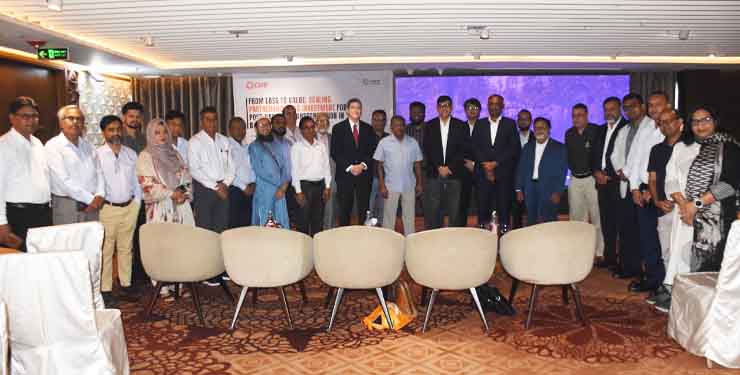
The workshop concluded with a shared commitment to evidence-based investment and coordinated action to accelerate post-harvest transformation in Bangladesh. CARE Bangladesh’s work in this area is part of its broader effort to promote inclusive agricultural market systems and support improved farmer incomes and more resilient food systems.