
























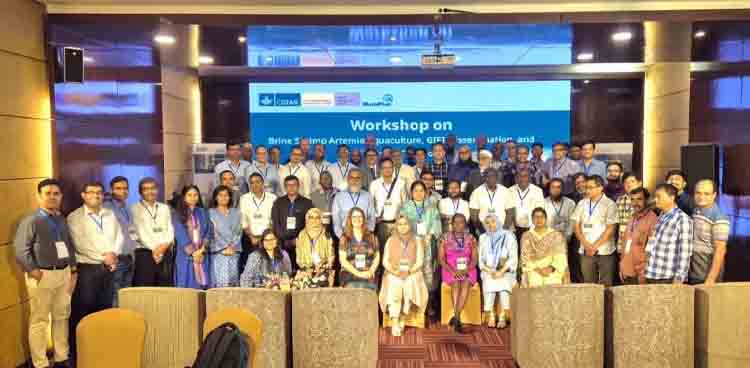
 Agrilife24.com:The remarkable three-decade journey of Genetically Improved Farmed Tilapia (GIFT) in Bangladesh was highlighted at the international workshop “GIFT Dissemination Experience and Institutional Collaboration,” organized by WorldFish, Bangladesh, on 29 September 2026.
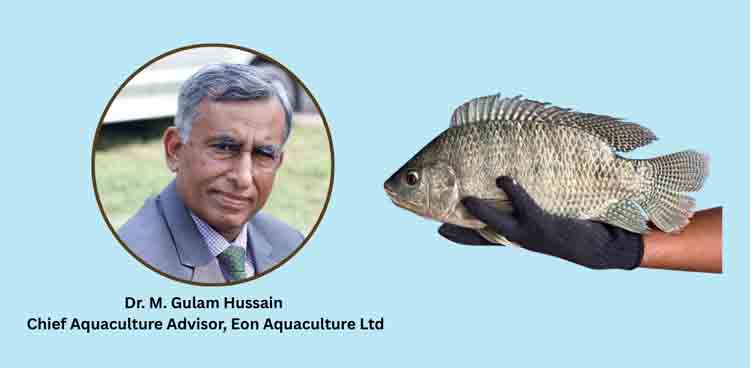
A keynote presentation titled “Three Decades of GIFT Dissemination Experience and Institutional Collaboration” was delivered by Dr. M. Gulam Hussain, Chief Aquaculture Advisor, Eon Aquaculture Ltd. and former Director General of the Bangladesh Fisheries Research Institute (BFRI), together with co-authors Dr. AHM Kohinoor and Mr. Zillur Rahman.
The presentation reflected on Bangladesh’s extraordinary experience with GIFT dissemination, genetic improvement, hatchery development and the transformation of tilapia into one of the country’s most important aquaculture species.
A lifetime contribution to GIFT research and tilapia development
Dr. M. Gulam Hussain’s more than three decades of research and professional engagement with GIFT and tilapia development has been closely associated with the evolution of genetic improvement, quality broodstock, seed production and wider dissemination of improved tilapia in Bangladesh.
The keynote emphasized that the introduction of GIFT and subsequent genetic improvement represented a major turning point for Bangladesh’s tilapia aquaculture. GIFT was introduced in Bangladesh in 1994, followed by systematic research, breeding, dissemination and farmer adoption through collaboration among BFRI, WorldFish, government institutions, the private sector, NGOs and development partners.
Over successive generations, genetic improvement contributed to substantial gains in growth performance, with the presentation highlighting approximately 5–64% improvement in growth across generations while maintaining inbreeding below 1%.
The experience demonstrates how sustained research and genetic selection can translate scientific advances into practical benefits for hatcheries, farmers, consumers and the wider aquaculture economy.
From research to a national aquaculture industry
The keynote documented the remarkable expansion of Bangladesh’s tilapia sector—from only 2,014 tonnes in 1999 to approximately 354,142 tonnes in 2024. More than 500 tilapia hatcheries and over 25,000 commercial farms are now part of the production system.
Bangladesh has emerged as a major global tilapia producer, ranking 3rd in Asia and 4th globally, according to the figures presented at the workshop, and contributing approximately 6% of global tilapia production.
The country also produces more than five billion all-male tilapia seed annually, while Bangladesh has developed a significant breeding-nucleus capacity, including the country’s collaboration with WorldFish and the establishment of advanced breeding systems.
These achievements illustrate the powerful link between genetic improvement, quality seed, hatchery technology, farmer adoption and institutional collaboration.
Institutional collaboration at the heart of success
The keynote stressed that Bangladesh’s GIFT success was not the achievement of a single organization. Rather, it resulted from a long-term collaborative ecosystem involving:
* BFRI-National Research, genetic improvement and knowledge development;
* WorldFish-GIFT germplasm, technical expertise and support for breeding-nucleus development;
* Government institutions-Policy, Regulation, Extension and sectoral support;
* Private sector-Hatcheries, commercial farming, feed, markets and investment;
* Development partners-including AIN, RFLDC, DANIDA, CSISA-BD and others; and
* NGOs, including BRAC and other organizations-supporting seed production, farmer outreach and dissemination.
As highlighted in the keynote, collaboration multiplied impact by connecting research and breeding with hatcheries, commercial farms and farmers across Bangladesh.
Lessons for the future
The presenters emphasized that quality seed and continuous genetic improvement remain the foundation of sustainable tilapia aquaculture. They also identified institutional coordination, long-term commitment, capacity building, technology transfer, public-private partnerships, continuous research and monitoring as essential elements for maintaining the gains achieved over three decades.
Looking forward, the presentation called for stronger next-generation GIFT strains, expansion of Breeding Nucleus and TBN networks by Eon Aquaculture Limited, a sister organization of Eon Group of Industries, Bangladesh, improved seed quality and biosecurity, stronger hatchery standards, and increased adoption of climate-resilient and environmentally sustainable production technologies.
The presenters also highlighted opportunities to explore new markets and value-added tilapia products and to strengthen regional and international collaboration for wider GIFT dissemination across Asia, Africa and beyond.
GIFT: More than a fish strain
A central message of the keynote was that the GIFT experience represents much more than the development of an improved tilapia strain. It represents a long-term pathway connecting science, genetic improvement, institutions, private enterprise, farmers and food security.
“GIFT is not just a strain-it is a partnership, a platform and a proven pathway for sustainable tilapia production and food security.”
The three-decade journey of GIFT in Bangladesh therefore stands as an important example of how long-term scientific research, genetic improvement and institutional collaboration can transform aquaculture, generating benefits for farmers, consumers and the national economy.
For Dr. M. Gulam Hussain and his co-authors, the keynote was also an opportunity to reflect on the evolution of GIFT research and dissemination in Bangladesh—and to look ahead toward the next generation of improved tilapia, stronger breeding systems and a more sustainable and productive aquaculture future.
Key message
Better Seed • Better Farming • Better Nutrition • A Sustainable Future