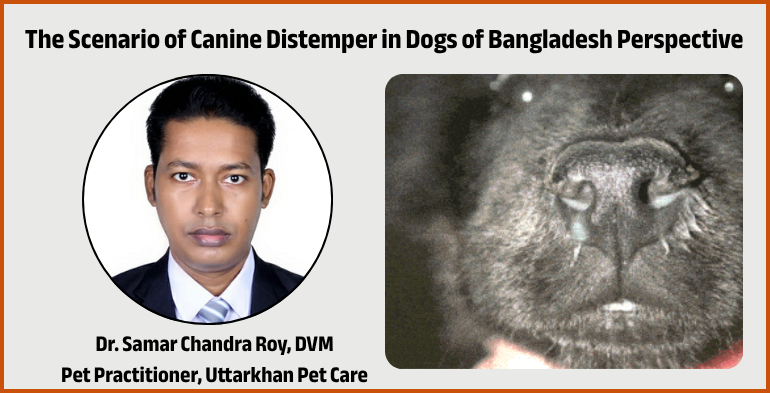
By Dr. Samar Chandra Roy, DVM
Introduction
Canine distemper is a highly contagious and often fatal viral disease affecting domestic dogs and a wide range of wild carnivores. It is characterized by systemic infection involving the respiratory, gastrointestinal, and nervous systems. Despite the availability of effective vaccines, canine distemper remains a major concern in developing countries, including Bangladesh, due to inadequate vaccination coverage and large populations of free-roaming dogs.
The disease significantly impacts animal welfare, veterinary practice, and public awareness. Although canine distemper is not zoonotic, its high morbidity and mortality rates make it one of the most important infectious diseases of dogs. In Bangladesh, where pet ownership is increasing alongside a substantial stray dog population, the disease continues to persist due to gaps in preventive measures and veterinary infrastructure.
Causal Agent
Canine distemper is caused by the canine distemper virus (CDV), which belongs to:
- Family: Paramyxoviridae
- Genus: Morbillivirus
The virus is closely related to:
- Measles virus (humans)
- Rinderpest virus (cattle, now eradicated)
CDV is an enveloped, single-stranded RNA virus, which makes it relatively fragile in the environment but highly infectious under close-contact conditions.
Transmission
The virus spreads primarily through:
- Aerosol droplets (coughing, sneezing)
- Direct contact with infected animals
- Contaminated food, water, or fomites
In Bangladesh, transmission is facilitated by:
- High density of stray dogs
- Poor sanitation and close animal contact
- Lack of isolation of infected animals
Epidemiology (Bangladesh Perspective)
Host Range
- Domestic dogs (primary host)
- Wild carnivores (foxes, jackals, mongooses)
Age Susceptibility
- Puppies aged 3–6 months are most susceptible
- Maternal antibodies decline during this period
Risk Factors in Bangladesh
- Low Vaccination Coverage
- Many pet owners do not complete vaccination schedules
- Stray dogs are mostly unvaccinated
- Large Free-Roaming Dog Population
- Urban and rural areas both have significant stray populations
- Close interaction between stray and pet dogs’ increases transmission
- Poor Awareness
- Limited knowledge about vaccination and disease prevention
- Delayed veterinary consultation
- Environmental Conditions
- Overcrowding in shelters or communities
- Poor hygiene
Seasonality
- More cases reported during cooler months and rainy seasons, when viral survival and transmission increase
Current Situation
Although precise epidemiological data in Bangladesh are limited, canine distemper is commonly reported in:
- Veterinary teaching hospitals
- Private clinics
- Animal rescue organizations
Pathology
Pathogenesis
- Virus enters through respiratory tract
- Replicates in lymphoid tissues
- Causes immunosuppression
- Spreads via bloodstream (viremia)
- Affects multiple organs:
- Respiratory system
- Gastrointestinal tract
- Central nervous system
Gross Lesions
- Nasal and ocular discharge
- Pneumonia
- Gastroenteritis
- Hyperkeratosis of footpads (“hard pad disease”)
Histopathology
- Lymphoid depletion
- Interstitial pneumonia
- Demyelination in CNS
- Inclusion bodies in epithelial and nervous tissues
Clinical Signs
Clinical signs vary depending on the stage and severity of infection.
- Early Signs
- Fever (biphasic)
- Lethargy
- Loss of appetite
- Nasal and ocular discharge
- Respiratory Signs
- Coughing
- Dyspnea (difficulty breathing)
- Pneumonia
- Gastrointestinal Signs
- Vomiting
- Diarrhea (often severe)
- Dehydration
- Dermatological Signs
- Thickening of footpads (hard pad disease)
- Skin pustules
- Neurological Signs
- Muscle twitching (myoclonus)
- Seizures
- Ataxia
- Paralysis
- Ocular Signs
- Conjunctivitis
- Keratitis
- Possible blindness
Disease Outcome
- Recovery with lifelong immunity
- Chronic neurological complications
- Death (common in severe cases)
In Bangladesh, many cases present late, often with neurological signs, due to delayed treatment.
Diagnosis
- Clinical Diagnosis
Based on:
- History (unvaccinated dog)
- Combination of respiratory, gastrointestinal, and neurological signs
- Laboratory Diagnosis
- Hematology
- Leukopenia (early stage)
- Antigen Detection
- ELISA kits (limited availability in Bangladesh)
- Molecular Tests
- RT-PCR (highly specific but limited to advanced labs)
- Cytology
- Detection of inclusion bodies
- Serology
- Antibody detection (less useful for acute cases)
Challenges in Bangladesh
- Limited diagnostic facilities outside major cities
- Dependence on clinical diagnosis
- Cost constraints
Treatment
There is no specific antiviral treatment for canine distemper. Management is mainly supportive and symptomatic.
Supportive Therapy
- Fluid therapy (to prevent dehydration)
- Electrolyte balance
- Nutritional support
Medications
- Broad-spectrum antibiotics (to control secondary bacterial infections)
- Antiemetics (for vomiting)
- Anticonvulsants (for seizures)
- Vitamin supplementation
Management
- Isolation of infected dogs
- Proper hygiene and nursing care
Prognosis
- Guarded to poor in severe cases
- Neurological cases have a poor prognosis
In Bangladesh, treatment success is often limited due to:
- Late presentation
- Financial constraints
- Lack of intensive care facilities
Prevention
- Vaccination
Vaccination is the most effective method of prevention.
Common Vaccines Used in Bangladesh
- Multivalent vaccines such as:
- DHPPi (Distemper, Hepatitis, Parvovirus, Parainfluenza)
- Common brands:
- Nobivac DHPPi
- Vanguard Plus 5
Vaccination Schedule
- First dose: 6–8 weeks
- Booster: Every 3–4 weeks until 16 weeks
- Annual booster
- Control of Stray Dog Population
- Sterilization programs
- Vaccination campaigns
- Public Awareness
- Educating pet owners about vaccination
- Early veterinary consultation
- Hygiene and Management
- Isolation of infected animals
- Disinfection of environment
- One Health Approach
Although not zoonotic, controlling canine distemper contributes to:
- Better animal health
- Reduced disease burden in wildlife
Conclusion
Canine distemper remains a significant infectious disease of dogs in Bangladesh, particularly due to inadequate vaccination coverage and the large population of stray dogs. The disease affects multiple body systems and often leads to severe complications or death, especially when treatment is delayed.
Effective control relies heavily on vaccination, responsible pet ownership, and improved veterinary services. Increasing public awareness and implementing nationwide vaccination campaigns are essential steps toward reducing the burden of canine distemper.
With coordinated efforts from veterinarians, government authorities, and the public, it is possible to significantly control and eventually minimize the impact of canine distemper in Bangladesh.
- Writer:Pet Practitioner, Uttarkhan Pet Care