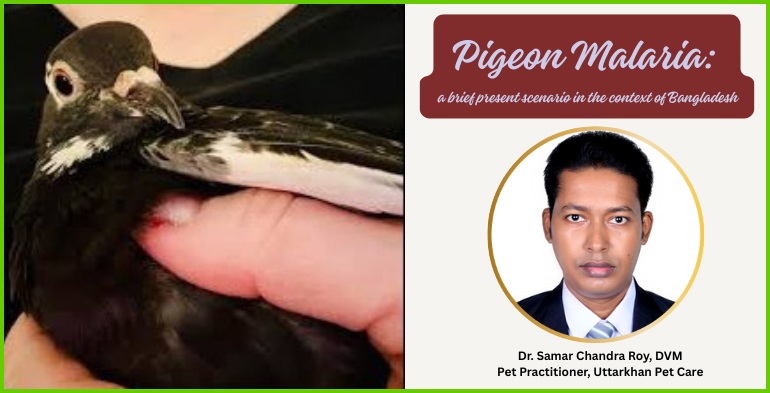
By Dr. Samar Chandra Roy, DVM
- Introduction
Avian malaria is an important protozoan disease of birds, including pigeons (Columba livia), caused by blood parasites of the genus Plasmodium. It resembles human malaria in transmission and pathogenesis but involves different parasite species. The disease affects both wild and domesticated birds and can cause significant morbidity and mortality, especially in young or immunocompromised pigeons.
In Bangladesh, pigeon farming is increasingly popular for meat and hobby purposes. However, tropical climate conditions favor mosquito breeding, increasing the risk of avian malaria transmission.
- Etiology
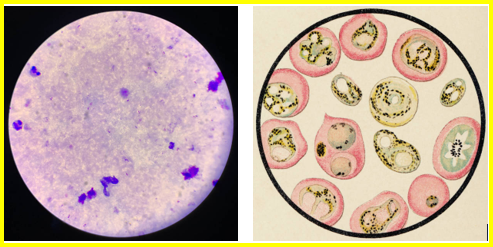
Avian malaria in pigeons is caused by protozoan parasites of the genus Plasmodium. Important species include:
- Plasmodium relictum (most common)
- Plasmodium elongatum
- Occasionally Plasmodium gallinaceum
These parasites are transmitted by mosquitoes such as:
- Culex spp.
- Aedes spp.
The parasite undergoes both asexual reproduction in birds and sexual reproduction in mosquitoes.
- Epidemiology (Bangladesh Perspective)
- Geographical distribution: Worldwide, including Bangladesh.
- Climate influence: Warm, humid, and rainy seasons (April–October in Bangladesh) favor mosquito breeding.
- Host range: Affects pigeons, chickens, ducks, and wild birds.
- Reservoirs: Wild and migratory birds act as reservoirs and spread infection to domestic pigeons.
Risk factors in Bangladesh:
- Poor sanitation in lofts
- Standing water near farms
- Mixed rearing with wild birds
- Lack of mosquito control
- Pathogenesis
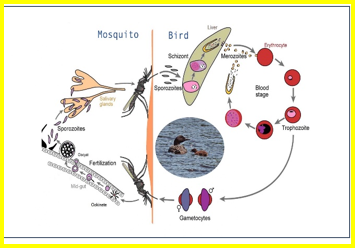
After an infected mosquito bite:
- Sporozoites enter the bloodstream.
- They invade tissues (liver, spleen, macrophages).
- Multiply and release merozoites.
- Merozoites infect red blood cells (RBCs).
- RBC destruction leads to anemia.
The rupture of infected RBCs causes:
- Toxin release
- Organ damage
- Reduced oxygen transport
Severe infection leads to systemic failure and death.
- Pathology
Gross lesions:
- Pale carcass (anemia)
- Enlarged liver and spleen
- Hydropericardium
- Dark discoloration of organs
Microscopic lesions:
- Parasites inside RBCs
- Hemozoin pigment deposition
- Inflammation in liver, lungs, and spleen
- Clinical Signs
Clinical signs depend on severity and immunity.
Acute form:
- Weakness and depression
- Loss of appetite
- Weight loss
- Anemia (pale comb/skin)
- Diarrhea
- Sudden death
Chronic form:
- Poor growth
- Reduced flying ability
- Enlarged abdomen (organ enlargement)
- Intermittent illness
Some pigeons may remain asymptomatic carriers.
- Diagnosis
Field diagnosis:
- Based on clinical signs and history (mosquito exposure)
Laboratory diagnosis:
- Blood smear examination
- Detection of parasites in RBCs
- PCR (molecular test)
- Confirms species (e.g., P. relictum)
- Post-mortem findings
- Enlarged organs, anemia
- Histopathology
- Detection of parasite pigments and tissue damage
- Treatment
Treatment in pigeons is often supportive and partially effective.
Antiprotozoal drugs:
- Chloroquine
- Primaquine
- Quinacrine (less commonly used)
Supportive therapy:
- Vitamin supplementation (especially B-complex)
- Iron therapy for anemia
- Good nutrition and hydration
In Bangladesh, treatment is often limited due to lack of specific avian drugs and late diagnosis.
- Prevention and Control
Prevention is the most effective strategy.
Mosquito control:
- Eliminate stagnant water
- Use insecticides and repellents
- Install nets around pigeon houses
Management practices:
- Maintain hygiene in lofts
- Avoid overcrowding
- Separate sick birds
- Prevent contact with wild birds
Environmental control:
- Improve drainage systems
- Use fans or smoke to repel mosquitoes
Prophylaxis:
- Preventive medication during high-risk seasons (rainy season)
In Bangladesh, integrated mosquito management is crucial due to high vector density.
- Conclusion
Avian malaria is a significant but often overlooked disease in pigeons, especially in tropical countries like Bangladesh. The disease causes anemia, organ damage, and sometimes death. Due to favorable climatic conditions, the risk of transmission remains high throughout much of the year.
Early diagnosis, mosquito control, and proper management are essential to reduce economic losses and maintain pigeon health. Preventive measures are more effective than treatment, making biosecurity and vector control key components in Bangladesh.
References
- Avian malaria overview
- Case report of avian malaria in pigeon (Plasmodium relictum)
- Pathology findings in pigeons
- Scientific data on avian malaria parasites