


















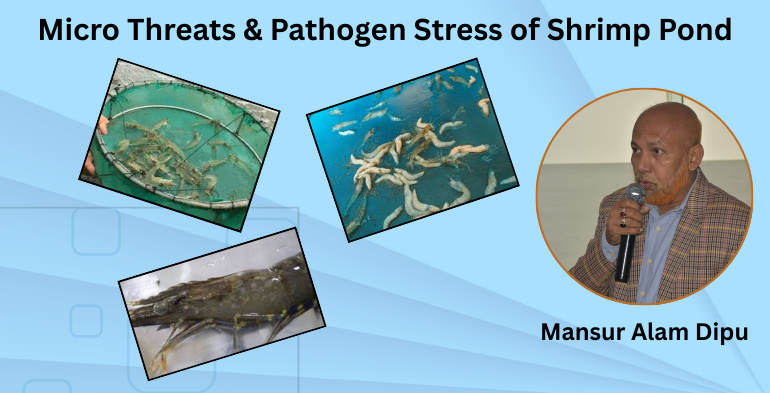
Mansur Alam Dipu: Shrimp culture is a highly technical farming activity and is constantly under threat from unseen microbial and viral pathogens present in pond sediments and water. These hidden threats include viruses and bacterial pathogens such as White Spot Syndrome Virus (WSSV), Infectious Myonecrosis Virus (IMNV), Taura Syndrome Virus (TSV), and Enterocytozoon hepatopenaei (EHP), which pose significant risks to shrimp production. These pathogens can quietly persist in the pond environment, remaining dormant until favorable conditions trigger disease outbreaks. Once activated, they can spread rapidly, causing widespread infections that result in severe shrimp mortality and substantial economic losses.
Shrimp diseases are often complex because they do not originate from a single source. In many cases, shrimp experience co-infections involving multiple pathogens simultaneously, which can intensify disease severity. In addition, environmental stressors such as poor water quality, high stocking density, and inadequate pond management can stress shrimp and suppress their immune systems, making them more vulnerable to opportunistic pathogens that would not normally cause disease.
The interaction between multiple pathogens and environmental stressors is what makes shrimp disease management particularly challenging. White Feces Syndrome (WFS) is a clear example of this complexity. Shrimp affected by WFS often reduce or stop feeding due to an imbalance in their gut microbiota. This imbalance may result from high pathogen loads, particularly Enterocytozoon hepatopenaei (EHP) and Vibrio bacteria. Additionally, poor feed quality can worsen the condition by failing to provide essential nutrients needed to maintain a healthy gut. ogether, these factors weaken shrimp, increasing their susceptibility to secondary infections and further health problems. Therefore, addressing both microbial balance and feed quality is crucial for the prevention and effective management of White Feces Syndrome.
Understanding the life cycle and behavior of pathogens in shrimp ponds is crucial for effective disease management. Some pathogens can remain dormant in pond sediments, waiting for favorable conditions to become active. Pond sediments act as critical reservoirs for harmful pathogens because organic matter—such as uneaten feed, shrimp waste, and decaying organisms—accumulates at the pond bottom, creating an ideal environment for microbial growth. Harmful bacteria such as Vibrio species can multiply rapidly in these nutrient-rich sediments, while dormant viral particles can persist and remain viable for long periods.
Enterocytozoon Hepatopenaei (EHP), a microsporidian parasite, is particularly concerning due to its resilience. EHP spores are highly resistant and can persist in pond soil and water for extended periods, surviving even under unfavorable conditions. When the same pond is reused for subsequent culture cycles, these spores can reactivate and spread, creating a recurring cycle of infection that is difficult to break. This repeated disease cycle can significantly impair shrimp growth and overall productivity, making EHP infections especially challenging to control and eradicate.
Factors Contributing to Shrimp Disease Outbreaks
- Poor Water Quality
Pathogens thrive in poor water quality because it often contains high levels of organic matter and waste, which provide nutrients for bacterial growth. Low dissolved oxygen levels can stress shrimp, making them more susceptible to infections. - High Stocking Density
High stocking density increases stress and competition among shrimp, weakening their immune systems. It also allows pathogens to spread more quickly throughout the population. - Excess Organic Matter
The accumulation of uneaten feed, shrimp waste, and decaying organisms at the pond bottom creates a nutrient-rich environment that supports the growth of harmful bacteria and other pathogens. - Inadequate Biosecurity
Poor biosecurity measures allow pathogens to enter farms through contaminated equipment, water, or feed, leading to the introduction and rapid spread of disease. - Temperature Fluctuations
Sudden changes in water temperature can stress shrimp, making them more vulnerable to infections. Some pathogens become more active and virulent at specific temperature ranges. - Poor Nutrition
Inadequate or unbalanced nutrition weakens the shrimp’s immune system, making them more prone to infections. Pathogens can exploit this weakened condition to establish disease. - Stress Factors
Stress caused by handling, environmental changes, overcrowding, or poor management can suppress the shrimp’s immune system. Stressful conditions may also trigger dormant pathogens to become active.
The simplest way to keep a pond healthy and free from pathogens is to reduce the accumulation of organic matter in both the water column and at the pond bottom. This can be achieved through two main approaches: managing inputs and ensuring proper outputs.
Firstly, effective feed management is essential. Shrimp should be fed only the amount necessary to meet their nutritional requirements, avoiding excess feed that can sink to the bottom and decompose. The use of high-quality feed improves digestion and reduces waste production, thereby limiting organic matter accumulation.
Secondly, regular removal of sludge and waste from the pond bottom helps prevent the buildup of organic matter. Introducing probiotics into the pond environment is particularly important. Probiotics are beneficial microorganisms that help break down organic matter and maintain a healthy microbial balance. They can outcompete harmful bacteria and support overall pond health by enhancing digestion and nutrient absorption.
Additionally, increasing dissolved oxygen levels supports the growth of beneficial bacteria and is crucial for oxidation processes that promote a cleaner and healthier pond environment. Proper aeration reduces the risk of pathogen development and enhances the overall well-being of shrimp populations.