





















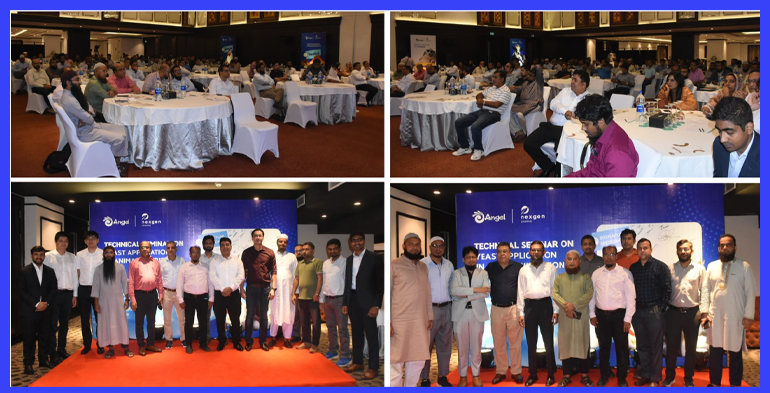
Staff Correspondent: A major technical seminar titled “Yeast Application in Animal Nutrition” was held on July 4, 2026, at the Sky Ballroom of Le Méridien Dhaka. The event was jointly organized by Angel Yeast Co., Ltd. and NexGen Pharma to introduce sustainable and science-based solutions for Bangladesh’s poultry, livestock, and aquaculture sectors.
The seminar brought together leading industry professionals, feed manufacturers, nutritionists, and stakeholders to discuss the latest advancements in biotechnology and their role in improving animal health and productivity.
The program began with a welcome address by Md. Mohe Uddin Al Mamun, Managing Director of NexGen Pharma. He emphasized the importance of adopting innovative feed technologies to ensure sustainable livestock production and food safety in Bangladesh.
The technical session on “Yeast Application in Animal Nutrition” was led by international animal nutrition experts, including Frank Xiao, Senior Product Manager of Angel Yeast Co., Ltd., and Dr. Rafay Ahmed Khan, Product Manager of Angel Yeast Pakistan. The experts presented scientific findings on the application of live yeast in animal nutrition and its positive impact on feed efficiency, gut health, and overall production performance.
Among the distinguished guests present were Mahabub Sunny, Country Manager of Angel Yeast Bangladesh, and Md. Nazmul Haque, Admin Manager of NexGen Pharma.
During the seminar, the speakers explained how live yeast had emerged as a game-changing solution for animal nutrition. They noted that scientific studies had demonstrated significant improvements in feed digestion and nutrient absorption when live yeast was incorporated into animal diets. In broiler production, live yeast had improved average daily weight gain and feed conversion efficiency while reducing feed consumption. It had also promoted a healthier gut environment by increasing beneficial microorganisms and reducing harmful pathogens such as E. coli.
For laying hens, the experts reported that live yeast had contributed to higher egg production rates and reduced the incidence of intestinal diseases. They stressed that improving animal gut health through natural feed additives was becoming increasingly important for sustainable livestock production.
The keynote speakers emphasized that safe food for humans began with safe feed for animals. They stated that the adoption of green technologies such as live yeast was essential for producing safe and chemical-free milk, meat, fish, and eggs. They also highlighted the potential of modern biological solutions to strengthen Bangladesh’s feed and livestock industries, enhance public health, and contribute to national economic growth.
The seminar concluded with a strong call for greater adoption of scientifically proven feed technologies across the country. Participants expressed optimism that innovations such as live yeast would play a vital role in ensuring safe animal protein production and supporting the long-term development of Bangladesh’s livestock and aquaculture sectors.