



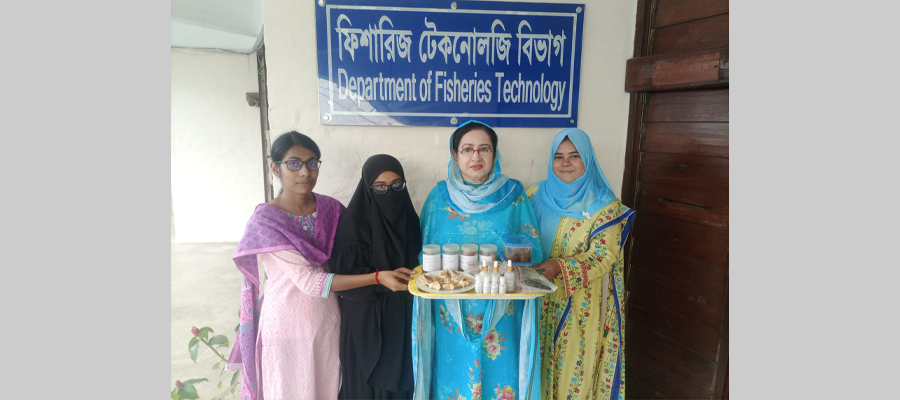
Mohammad Riaz, BAU:A team of researchers at Bangladesh Agricultural University (BAU) has achieved preliminary success in manufacturing affordable cosmetics and nutritious food products using indigenous marine red seaweed. The researchers have successfully developed innovative products, including face serum, toothpaste, and cookies, from marine algae. These products are not only natural and eco-friendly but also open up new industrial prospects through the effective utilization of domestic resources.
The research team was led by Professor Dr. Fatema Hoque Shikha from the Department of Fisheries Technology, working alongside two postgraduate students from the same department.
"Since red seaweed is abundantly available in the sea and rich in nutrients, we took the initiative to make it usable for both nutrition and skincare," said Professor Dr. Fatema Hoque Shikha. "We have developed face serum and toothpaste from the extract of locally sourced seaweed. The serum is rich in antioxidant and anti-aging properties, which can help brighten skin, control acne, and heal wounds. Additionally, the toothpaste contains natural antibacterial, antioxidant, and mineral properties that will help prevent tooth decay, protect against gum infections, and improve overall oral health. This can serve as a safe and eco-friendly alternative to synthetic cosmetic ingredients."
She further added that the same seaweed has been used to bake nutrient-dense food products, such as pies and cookies. "As these foods contain protein, dietary fiber, and various minerals, they can help meet human nutritional requirements. The dietary fiber improves digestion and boosts immunity, while calcium and magnesium strengthen bones and teeth. It can serve as a highly nutritious and healthy alternative to conventional snacks," she explained.
Regarding the affordability of the developed products, Dr. Shikha noted that since seaweed is readily available, production costs can be kept low. Consequently, these products will remain well within the purchasing power of general consumers.
The researchers explained that a systematic scientific process was followed to extract and process the seaweed. Seaweed of the Gracilaria species was collected, cleaned, processed, and subjected to heat treatment to prepare the extract. This extract was subsequently used to formulate the various products. In the study, the quality and efficacy of the products were initially tested using seaweed extract ratios of 5%, 10%, and 15%. The highly promising results indicate strong potential for commercial production.
The global market for seaweed-based products is expanding rapidly, with red seaweed already serving as a crucial raw material in the food, pharmaceutical, and cosmetic industries. In this context, implementing seaweed-based enterprises in Bangladesh could generate new employment opportunities in coastal regions, foster small-scale entrepreneurship, and boost the country's foreign exchange earnings.
It is worth noting that red seaweed is primarily a deep-sea marine plant that gets its deep red color from a pigment called phycoerythrin. Currently, several countries around the world are commercially cultivating this seaweed as a primary raw material for food, modern medicine, and the cosmetics industry.
 |
 |
 |
 |
 |
 |
 |
 |
 |
 |
 |
 |
 |
 |
 |
 |
 |
 |