




















BATTAMBANG PROVINCE, CAMBODIA-For years, Long Thou, age 40, traveled across Cambodia, working in construction to provide for his wife and two children. But four years ago, seeking a way to stay closer to his home in Rukh Kiri District, he decided to transition to rice farming.
Today, he manages 5,000 square meters of land, with about 4,000 square meters devoted to rice and the remainder to vegetables. His wife, Orn Leak, is his primary partner in the fields, making the farm a family effort.
Thou initially grew only a small amount of vegetables, intended for home use. However, as neighbors began asking to buy his produce, he realized there was a business opportunity in vegetable production.
For three years, he grew vegetables by using the methods he knew—planting seeds directly in the field, leaving the soil uncovered, and watering his crops by hand.
Embracing a New Approach to Vegetable Farming
Thou’s vegetable farming journey shifted when he attended a community meeting organized by his village chief. There, he heard about the Nurture Veg project, implemented by East-West Seed Knowledge Transfer (EWS-KT) with support from the Swiss Agency for Development and Cooperation, HEKS/EPER, and Caritas Switzerland.
After determining that the project was genuine, he officially joined Phase 2 of Nurture Veg in May 2025, volunteering to host a demonstration farm for his community.
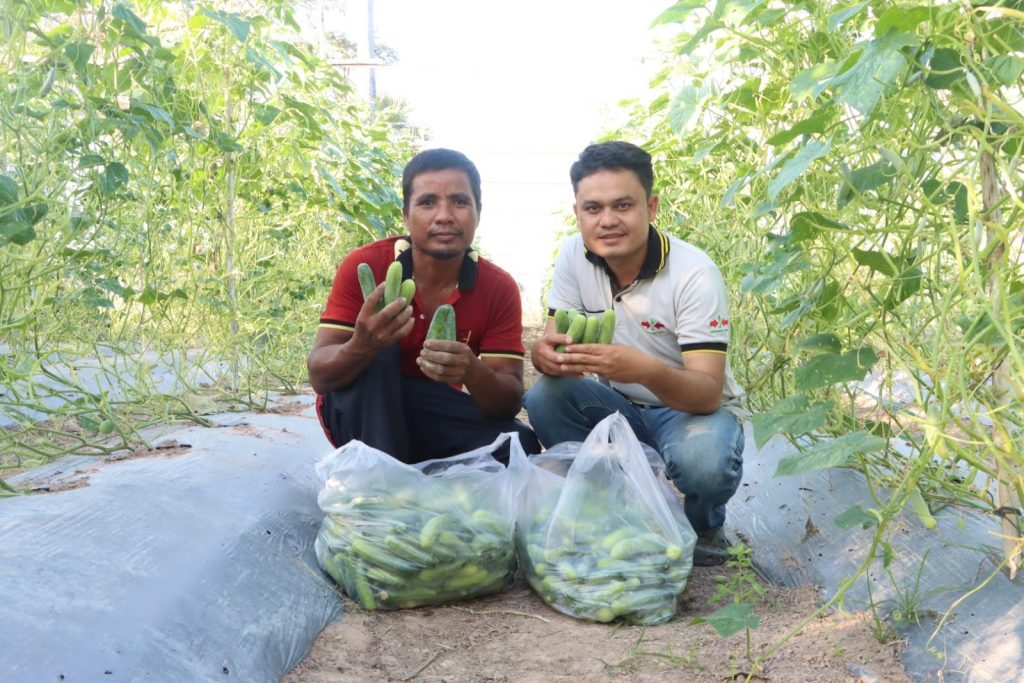
Through the EWS-KT trainings at his demo farm, Thou transformed his farming methods. He replaced labor-intensive hand watering with drip irrigation and learned how to implement agroecological techniques like raised beds, mulching, and trellising. He began to use seedling trays to give his plants a strong start.
He also gained critical knowledge regarding food safety and responsible pesticide use. “I learned the right time to apply treatments and how to use natural pesticides. I now know not to spray any chemicals at least two weeks before harvest to ensure the vegetables are safe for the consumers and my own family,” Thou shared.
Cultivating a Business Mindset
Following the advice of the EWS-KT team, Thou now keeps a record of every harvest. This professional approach simplifies business planning and enables him to accurately track his costs and profits. “My income has increased,” he says. “I can now afford better food and invest more in my children’s education. When I earned less, we had to spend much less.”
The family has built a smart business model. While Thou manages the crops, Leak sells their produce at the Tuol Koki Market. She also buys vegetables from other local farmers and sells them at the market, bringing in more income.
With his new awareness of the benefits of aligning planting with market demand, Thou has developed a seasonal business strategy: he recommends planting crops like cucumbers, yard long beans, and gourds between September and October. By the time these are ready for harvest in the dry season, market prices are higher because many farmers lack the water to grow them. Because the family has a reliable water source, they are able to grow crops year-round.
By embracing market-oriented, climate-smart vegetable production, this former construction worker has increased the profitability and resiliency of his farm, ensuring that he can earn a good living while staying close to his wife and children.
courtesy-