





















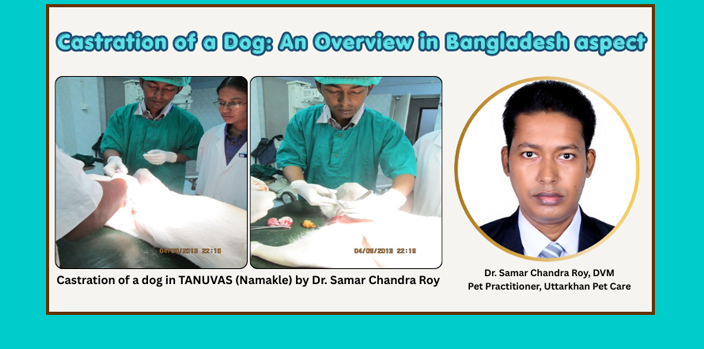
By: Dr. Samar Chandra Roy
Introduction
Neutering in dogs refers to the surgical removal of reproductive organs to prevent breeding and reduce hormone-driven behaviors. In males, this procedure is called castration (removal of testes), while in females it is called spaying (removal of ovaries, often along with the uterus). Neutering is one of the most common veterinary procedures worldwide and plays a crucial role in population control, disease prevention, and behavioral management.
In many countries, including Bangladesh, uncontrolled dog populations contribute to public health concerns such as rabies transmission, nuisance behavior, and animal welfare issues. Neutering programs—both clinical and community-based—help reduce stray populations and improve the quality of life for pets and communities.
Surgical Condition (Indications and Considerations)
Neutering is performed under both elective and medical conditions.
1) Elective Indications:
a) Population control
b) Prevention of unwanted mating
c) Reduction of aggressive or territorial behavior
d) Control of roaming tendencies
2) Medical Indications:
a) Testicular tumors in males
b) Prostatic diseases (e.g., benign prostatic hyperplasia)
c) Hormone-related disorders
3) Contraindications:
a) Severe systemic illness
b) Poor anesthetic risk (ASA grade III or above without stabilization)
c) Very young or old animals without proper evaluation
4) Ideal Age for Neutering: Typically, between 5–9 months, though timing may vary depending on breed, size, and health status
5) Premedication: Premedication is essential for reducing stress, minimizing anesthetic requirements, and ensuring smooth induction.
Common Premedication Drugs:
(a) Sedatives: Acepromazine or Dexmedetomidine
(b) Analgesics: Opioids such as Butorphanol or Morphine
(c) Anticholinergics (optional): Atropine or Glycopyrrolate (to control salivation and bradycardia)
Use of premedication:
· Sedation and anxiety reduction
· Preemptive pain management
· Reduction of anesthetic dose
· Smooth induction and recovery
6) Pre-surgical Preparation:
a) Fasting for 8–12 hours
b) Physical examination (temperature, pulse, respiration)
c) Blood tests if necessary
d) Clipping and aseptic preparation of surgical site
7) Anesthesia
a) General anesthesia is required for neutering procedures.
i) Stages of Anesthesia:
(1) Induction: Common agents: Propofol, Ketamine + Diazepam
(a) Rapid unconsciousness
(2) Maintenance:
Ø Inhalational anesthetics: Isoflurane or Sevoflurane
Ø Oxygen supplementation
(3) Monitoring:
Ø Heart rate
Ø Respiratory rate
Ø Oxygen saturation
Ø Reflexes and temperature
b) Local Anesthesia:
Lidocaine may be used for local nerve blocks to enhance pain control
8) Surgical Procedure
Castration in Male Dogs
Steps:
1) Animal positioned in dorsal recumbency
2) Surgical site (scrotal or pre-scrotal area) clipped and disinfected
3) Incision made over the testicle
4) Testicle exteriorized
5) Spermatic cord ligated using absorbable suture
6) Testicle removed
7) Incision closed with sutures
Technique Variations:
1) Open castration
2) Closed castration
Key Points:
1) Strict aseptic technique is essential
2) Proper ligation prevents hemorrhage
3) Careful tissue handling reduces complications
4) Postoperative Treatment and Care
Immediate Care:
1) Monitor recovery from anesthesia
2) Maintain body temperature
3) Observe for bleeding
Medications:
a) Antibiotics: e.g., Ceftriaxone, Amoxicillin-clavulanate (if indicated)
b) Analgesics: NSAIDs like Meloxicam or Carprofen
c) Anti-inflammatory drugs
Wound Care:
a) Keep incision clean and dry
b) Prevent licking (Elizabethan collar)
c) Remove sutures after 7–10 days
Activity Restriction:
a) Limit exercise for 10–14 days
b) Avoid jumping or rough play
Possible Complications:
a) Infection
b) Hemorrhage
c) Swelling or seroma
d) Anesthetic complications
Advantages of Neutering
e) Prevents unwanted litters
f) Reduces risk of reproductive cancers
g) Decreases aggressive and roaming behavior
h) Helps control stray population
i) Improves lifespan and quality of life
Disadvantages and Risks
j) Surgical and anesthetic risks
k) Possible weight gains due to hormonal changes
Conclusion
Neutering is a safe and effective surgical procedure that provides both individual and societal benefits. With proper preoperative preparation, skilled surgical technique, and appropriate postoperative care, complications are minimal. In regions like Bangladesh, where stray dog populations pose challenges, neutering programs are vital for public health and animal welfare.
Veterinarians, pet owners, and policymakers should work together to promote responsible pet ownership and expand access to affordable neutering services. Ultimately, neutering contributes to healthier pets, reduced disease transmission, and a more humane approach to animal population control.